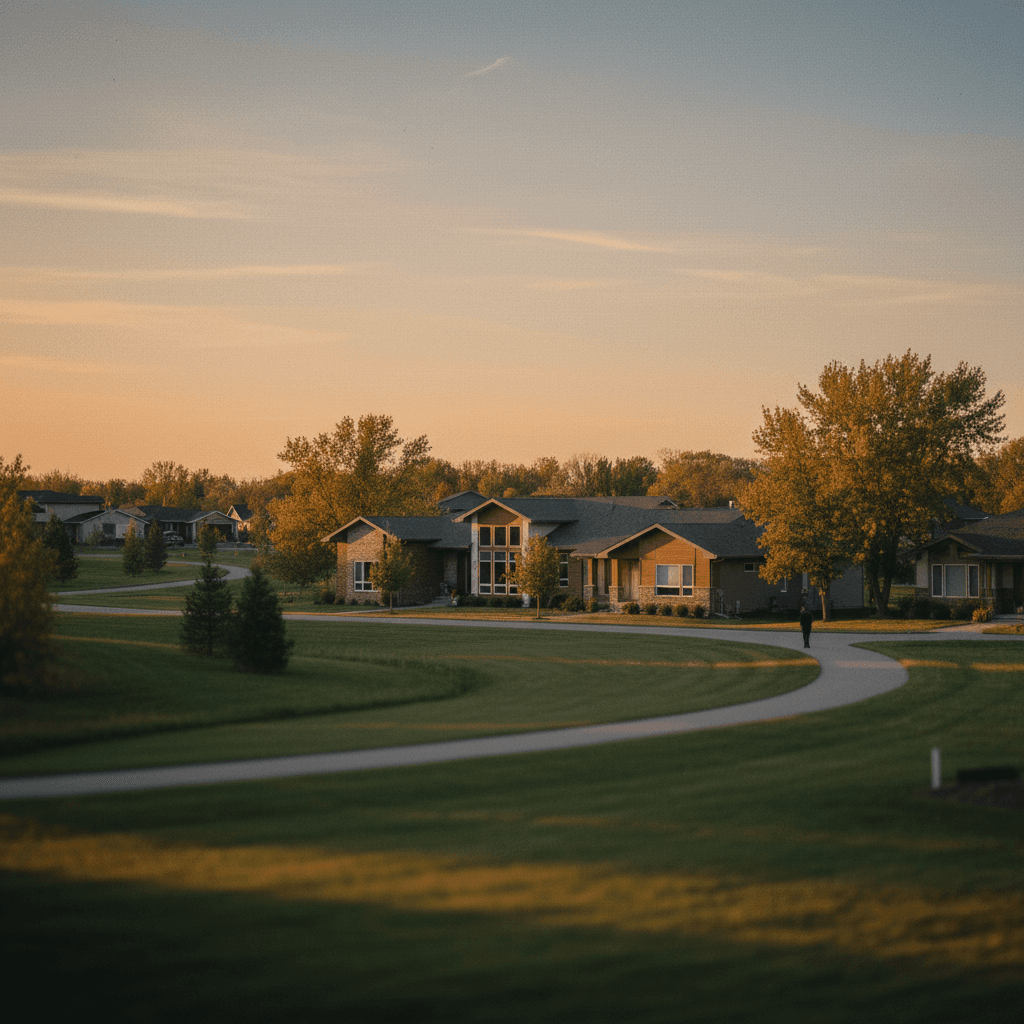
Fargo, North Dakota, represents a vibrant and growing real estate market, offering unique opportunities for both buyers and sellers. Understanding the intricacies of financing and mortgages within this specific local context is paramount for a successful real estate transaction. As a market analyst, I aim to provide a data-driven perspective on navigating the financial landscape of Fargo's housing market, from securing your initial loan to leveraging your home equity. Learn more about Fargo Real Estate Market Report: Your Guide to Buying.

The Fargo Real Estate Market: A Financing Perspective
The Fargo-Moorhead metropolitan area has consistently demonstrated economic resilience and steady growth, factors that significantly influence its housing market. A robust job market, driven by sectors such as healthcare (with major providers like Sanford Health Fargo and Essentia Health Fargo) and education (anchored by North Dakota State University), contributes to a stable demand for housing. This stability, coupled with a relatively affordable cost of living compared to national averages, makes Fargo an attractive location for prospective homeowners.
Fargo's Economic Landscape
Fargo's economy is characterized by a low unemployment rate, often hovering below the national average, and a diverse industrial base. This economic strength translates into a healthy housing market, where properties often maintain their value and appreciate steadily. For instance, recent data indicates that the median household income in Fargo is approximately $65,000, supporting a strong purchasing power for residents. The presence of significant employers and a growing tech sector ensures a continuous influx of residents, sustaining housing demand.
Current Market Trends & Affordability
While the national real estate market has seen fluctuations, Fargo has often exhibited a more measured and consistent trajectory. In the past year, the median home price in Fargo has seen an increase of approximately 5-7%, reflecting steady demand without the speculative peaks observed in some larger metropolitan areas. For example, a typical single-family home in areas served by respected institutions like Fargo North High School or Fargo South High School might command a median price in the high $200,000s to low $300,000s, varying by neighborhood and specific amenities. This market stability provides a more predictable environment for mortgage planning, allowing buyers to make informed decisions about their long-term financial commitments.
Key Mortgage Options for Fargo Homebuyers
Navigating the array of mortgage products can be daunting, but understanding the primary options available is crucial for Fargo homebuyers. Each loan type comes with its own set of advantages, eligibility criteria, and implications for your financial future.
Conventional and Government-Backed Loans
Conventional loans remain a popular choice for borrowers with strong credit and a substantial down payment. These loans often offer competitive interest rates and flexible terms. However, many Fargo buyers, particularly first-time homeowners, benefit significantly from government-backed options: Learn more about Your First Home in Fargo, ND: A Comprehensive Buyer's Guide.
- FHA Loans: Insured by the Federal Housing Administration, these loans are ideal for buyers with lower credit scores or smaller down payments (as low as 3.5%). They are particularly relevant in a market like Fargo, where entry-level housing is accessible.
- VA Loans: For eligible veterans and active-duty service members, VA loans offer exceptional benefits, including no down payment requirements and competitive interest rates. Fargo's strong military presence means these are a vital resource.
- USDA Loans: While Fargo itself is a metropolitan area, properties in designated rural areas surrounding the city may qualify for USDA loans, which also offer zero down payment options for low-to-moderate income borrowers.
Understanding which of these options aligns best with your financial profile is the first step toward homeownership in Fargo.
Specialized Local Programs
Beyond federal programs, North Dakota offers specific initiatives to assist homebuyers. The North Dakota Housing Finance Agency (NDHFA) provides various programs, including down payment and closing cost assistance, which can be particularly advantageous for residents looking to purchase in Fargo. These programs are designed to make homeownership more accessible and affordable, bridging the gap for many who might otherwise struggle with upfront costs. Consulting with local lenders who are well-versed in NDHFA programs is highly recommended to explore all available opportunities. Learn more about Selling Your Home in Fargo, ND: A Local Expert's Guide.
Mastering the Mortgage Application Process in Fargo
A streamlined mortgage application process can significantly reduce stress and increase the likelihood of securing the best possible terms. Proactive preparation and understanding each stage are key to a smooth transaction in the Fargo market.
Pre-Approval to Closing
The journey from initial interest to closing involves several critical steps:
- Pre-Approval: This initial step is vital. A pre-approval letter from a lender not only gives you a clear understanding of what you can afford but also signals to sellers in a competitive market that you are a serious and qualified buyer. In Fargo's current market, where well-priced homes can move quickly, having a pre-approval ready can give you a distinct advantage.
- Loan Application & Documentation: Once you find a home, you'll formally apply for the mortgage. This involves submitting extensive financial documentation, including pay stubs, tax returns, bank statements, and credit history. Organizing these documents beforehand can expedite the process.
- Appraisal and Underwriting: The lender will order an appraisal to ensure the home's value supports the loan amount. Concurrently, the underwriting team will review all your financial information to assess risk.
- Closing: This final stage involves signing all necessary documents, transferring funds, and officially taking ownership of your new Fargo home.
Key Financial Considerations
When applying for a mortgage, several financial metrics are closely scrutinized. Your credit score is paramount; a higher score (typically 740+) can unlock lower interest rates, translating to significant savings over the life of the loan. Your debt-to-income (DTI) ratio is another critical factor, ideally below 43% for most conventional loans. Lenders also assess your employment history and stability, typically looking for at least two years of consistent income. Furthermore, having reserves—funds available after your down payment and closing costs—can strengthen your application. For instance, consider saving for unexpected home repairs or property tax adjustments, particularly in neighborhoods like those around Lindenwood Park, where property values are robust.

Beyond the Initial Purchase: Refinancing and Home Equity in Fargo
For existing Fargo homeowners, the financial journey doesn't end with the initial mortgage. Strategic refinancing and leveraging home equity can provide substantial financial benefits and opportunities.
When to Consider Refinancing
Refinancing involves replacing your existing mortgage with a new one, often with different terms. Key reasons Fargo homeowners might consider refinancing include:
- Lowering Interest Rates: If current mortgage rates are significantly lower than your existing rate, refinancing can reduce your monthly payments and overall interest paid.
- Changing Loan Terms: You might want to switch from an adjustable-rate mortgage (ARM) to a fixed-rate mortgage for stability, or shorten your loan term to pay off your home faster.
- Removing PMI: If your home's equity has grown beyond 20% of its value, refinancing can help you eliminate private mortgage insurance (PMI), saving you monthly costs.
- Cash-Out Refinance: This allows you to tap into your home's equity, converting a portion of it into cash for major expenses, such as home renovations or debt consolidation.
Given Fargo's stable home value appreciation, many homeowners find themselves in a strong position to explore these options.
Leveraging Home Equity
Home equity represents the portion of your home that you truly own, calculated by subtracting your outstanding mortgage balance from your home's current market value. As your home appreciates and you pay down your mortgage, your equity grows. This equity can be a powerful financial tool. Beyond a cash-out refinance, homeowners can also utilize Home Equity Lines of Credit (HELOCs) or Home Equity Loans (HELs). These options provide access to funds at potentially lower interest rates than personal loans or credit cards, using your home as collateral. For instance, using equity to fund a kitchen remodel could enhance your home's value, which is a common strategy in desirable Fargo neighborhoods, improving both your living experience and future resale prospects. Learn more about Fargo, ND: Lifestyle & Cost of Living for Home Buyers &....
Local Resources and Expert Guidance for Fargo Financing
The complexity of real estate financing underscores the importance of working with knowledgeable local professionals. Their insights into the Fargo market can be invaluable.
Connecting with Local Lenders and Realtors
Engaging with local lenders who understand Fargo's specific market nuances and have established relationships within the community can significantly streamline your financing process. They are often more familiar with local appraisal practices, property tax structures, and specific programs available through the NDHFA. Similarly, a local real estate agent provides crucial guidance, helping you identify properties that align with your financial goals and connecting you with reputable lending partners. Their expertise ensures that your financing strategy is not only sound but also tailored to the unique characteristics of the Fargo real estate market.
Community Amenities and Property Value
When considering a mortgage, the location of your prospective home in Fargo is a key factor that influences both its appraised value and your long-term investment. Proximity to highly-rated schools, like Fargo Davies High School, or desirable recreational areas such as Island Park, significantly contributes to property desirability and value. Similarly, convenient access to essential amenities, whether it's the diverse offerings at Hornbacher's or the local charm of Young Blood Coffee, enhances the overall living experience and, by extension, the marketability and appraisal value of a home. Lenders consider these factors during the appraisal process, reinforcing the idea that a home is not just a structure but an integral part of a thriving community.
Conclusion
Successfully navigating financing and mortgages in Fargo, ND, requires a comprehensive understanding of market trends, available loan products, and the application process. Fargo's stable economic environment and diverse housing options present an excellent opportunity for homeownership and investment. By leveraging local expertise, preparing diligently, and strategically utilizing financing tools like refinancing or home equity, both buyers and sellers can optimize their real estate outcomes in this dynamic North Dakota market. The data consistently shows that informed decisions, supported by professional guidance, are the cornerstone of financial success in real estate. Learn more about Buying a Home in Fargo, ND: A Comprehensive Market Guide.
Frequently Asked Questions
What are the current mortgage rate trends in Fargo, ND?
Mortgage rates in Fargo, ND, generally mirror national trends, influenced by federal monetary policy and economic indicators. However, local lenders may offer competitive rates or specialized programs. Buyers should consult with local financial institutions to get real-time, personalized rate quotes and understand any regional incentives.
Are there specific first-time homebuyer programs available in Fargo?
Yes, first-time homebuyers in Fargo can often access state and federal programs such as FHA, VA, and USDA loans, which offer lower down payments or favorable terms. Additionally, the North Dakota Housing Finance Agency (NDHFA) provides programs designed to assist first-time buyers with down payment and closing cost assistance. It's crucial to research eligibility requirements and connect with lenders familiar with these programs.
How does Fargo's property tax system affect mortgage payments?
Property taxes in Fargo are assessed annually and typically included in your monthly mortgage payment (escrow). The tax rate varies based on the assessed value of your property and local mill levies. Understanding Fargo's property tax structure is vital for accurately estimating your total housing costs and ensuring affordability. Your real estate agent or lender can provide estimates based on specific property locations.
What role does credit score play in securing a mortgage in Fargo?
A strong credit score is fundamental for securing favorable mortgage terms in Fargo, as it is nationally. Lenders use credit scores to assess your creditworthiness and determine interest rates. While some loan programs accommodate lower scores, a higher score (generally 740+) can lead to better rates, lower monthly payments, and potentially more loan options. It's advisable to review your credit report and address any discrepancies before applying.
How can local amenities in Fargo influence my home's value and financing?
Local amenities significantly impact property values and, consequently, financing decisions in Fargo. Homes near top-rated schools like Fargo North High School or Fargo South High School, vibrant parks such as Island Park or Lindenwood Park, and convenient access to healthcare providers like Essentia Health Fargo, often command higher prices and appreciate more reliably. Lenders consider location and comparable sales in appraisal processes, making strong local amenities a positive factor in your home's long-term value and your ability to secure financing.
Need help with your real estate journey?
Our team is here to help you navigate the market with confidence.